Propane Tank Safety and Maintenance
Propane Tank Safety and Maintenance Guide
Oct
Propane Tank Safety and Maintenance Guide
Keeping a propane tank in good condition involves more than checking how much fuel remains. Regular observation, clear access around the equipment, prompt attention to unusual changes, and professional inspections all help support the safe operation of a propane system. Whether you use a tank at home, on a farm, or at a commercial property, understanding your responsibilities can help you recognize problems before they become more serious.
This propane tank safety and maintenance guide explains what owners can check themselves, which tasks require a qualified professional, how weather can affect propane equipment, and what to do when a leak or other hazard is suspected. For information about available equipment, visit Propane Tanks Direct and explore the guidance below before making maintenance or replacement decisions.
Why Propane Tank Safety and Maintenance Matter
A propane storage system includes more than the tank itself. Depending on the installation, it may include valves, regulators, piping, fittings, a fuel gauge, protective components, and connections leading to appliances or other equipment. A problem with any of these parts can affect the system’s operation.
Outdoor exposure can also contribute to deterioration. Rain, snow, standing water, vegetation, accidental impacts, and changing soil conditions may affect the tank or associated equipment. Underground installations have additional considerations, including corrosion protection and access to the service opening.
Maintenance needs vary according to tank design, installation type, operating conditions, manufacturer instructions, and applicable local requirements. A routine visual check is useful, but it does not replace a professional inspection or prove that a propane system is leak-free.
What to Check During a Routine Visual Inspection
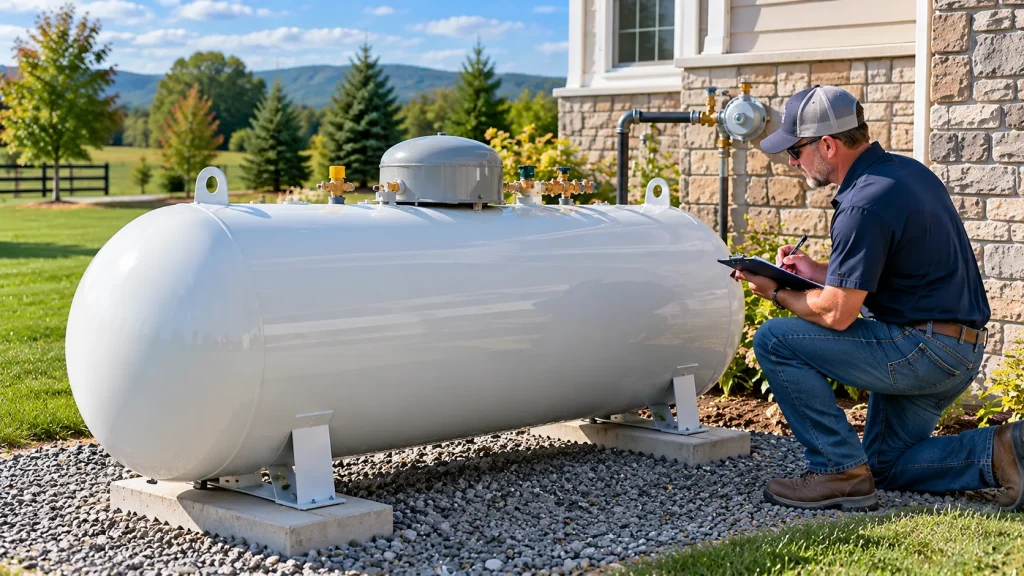
Owners can look for visible changes around a tank without dismantling equipment, opening protective covers, or attempting repairs. Follow the tank manufacturer’s instructions and keep a safe distance from anything that appears damaged or hazardous.
1. Look for visible damage and deterioration
Observe accessible tank surfaces for unusual corrosion, deep rust, dents, cracks, damaged coatings, or signs that the equipment has been struck. Ordinary discoloration is not necessarily evidence of a dangerous condition, but significant deterioration or physical damage should be assessed by a qualified propane professional.
Never scrape, drill, weld, cut, repaint over serious corrosion, or otherwise modify a propane tank to investigate a concern. Do not attempt to repair a tank or its pressure-containing components yourself.
2. Check the area around the tank
Keep the area around an above-ground tank accessible for inspection and servicing. Remove ordinary yard clutter and avoid allowing shrubs, weeds, stored materials, or equipment to obstruct access. Do not use the tank as a shelf, workbench, or support for other objects.
Check for signs of vehicle impact, disturbed supports, erosion, or water collecting around the installation. Do not move the tank or attempt to correct its position yourself. Contact a qualified professional if the tank appears unstable or its supports have shifted.
3. Observe accessible valves, piping, and fittings
Look for visibly bent piping, damaged protective covers, loose-looking components, or fittings that appear to have been disturbed. Do not tighten connections, adjust regulators, remove valve guards, or test components by manipulating them unless a qualified professional has specifically instructed you in an appropriate procedure.
Hissing sounds, an unusual propane odor, or other indications of a possible leak require immediate attention rather than a routine maintenance appointment.
4. Monitor the fuel gauge
Checking the gauge periodically helps you estimate the remaining fuel and plan deliveries. It is not a substitute for inspecting the tank or checking the condition of the system. If the gauge behaves unexpectedly or the tank runs out of propane, contact your propane supplier or a qualified professional for guidance before restoring service.
Seasonal Propane Tank Maintenance
Weather conditions can create different maintenance challenges throughout the year. A simple seasonal review helps owners notice changes in the installation and prepare questions for their service provider.
Winter: Snow, ice, and freezing conditions
Snow and ice can obstruct access to valves, regulators, piping, and other components. Keep the required service area accessible and follow your propane supplier’s guidance for clearing snow safely. Avoid striking equipment with shovels, using sharp tools around piping, or applying heat to frozen components.
If ice buildup appears on a regulator or another system component, do not try to thaw it with an open flame or improvised heating device. Contact a qualified professional to determine the cause and appropriate response.
Spring and summer: Rain, vegetation, and outdoor activity
After heavy rain, check from a safe distance for erosion, unusual standing water, exposed piping, or changes in the surrounding ground. Trim vegetation as needed without damaging tank surfaces, protective coatings, or lines. Keep lawn equipment, vehicles, and other machinery away from the installation.
Never dig, drive stakes, or undertake landscaping near buried propane equipment without first identifying underground utilities and following the applicable excavation requirements. If you suspect an underground tank or line has been disturbed, stop work and contact the appropriate qualified professionals.
After severe weather or accidental impact
Strong winds, flooding, falling trees, and vehicle collisions can damage a propane installation even when the tank initially appears intact. If the tank has shifted, piping is exposed, supports are damaged, or the installation otherwise looks abnormal, arrange a professional assessment. Treat any suspected leak as an emergency.
When to Schedule Professional Propane Tank Service
There is no single inspection interval that is appropriate for every tank and installation. Follow the equipment manufacturer’s instructions, the requirements that apply in your jurisdiction, and the recommendations of your propane supplier or qualified service provider.
Ask a qualified professional to assess visible corrosion, impact damage, unstable supports, damaged piping, suspected leaks, abnormal regulator behavior, or other changes that may affect safe operation. Professional service may also be appropriate before returning a system to service after an interruption, after the tank has run out of fuel, or following an event that may have damaged the installation.
Depending on the equipment and circumstances, a professional may evaluate the tank’s condition, accessible connections, regulators, safety devices, corrosion protection, and related components. The scope of service should reflect the tank type and the issue being investigated.
For technical guidance about residential propane safety and the importance of qualified inspections, consult the Propane Education & Research Council’s safety guide.
Important Differences Between Above-Ground and Underground Tanks
Above-ground tanks make much of the exterior visible, so owners can more easily notice surface changes or physical impacts. Their supports, surrounding ground, valves, and piping still need appropriate attention.
Underground tanks require different precautions because most of the vessel is concealed. Owners should not uncover the tank, excavate around it, or disturb its protective systems to conduct their own inspection. Corrosion protection, installation-specific components, and the condition of the surrounding area may require professional assessment.
If you are considering a new installation or replacement, read our guides to propane tank types and applications and review the propane tank buying guides for additional background. The right maintenance approach depends on the actual equipment and site conditions, not simply whether the tank is visible.
What to Do if You Suspect a Propane Leak
A suspected propane leak is an emergency, not a maintenance task. Warning signs can include the distinctive odor added to propane, a hissing sound, a gas detector alarm, or an unexplained change in system operation.
- Leave the area immediately. Move everyone away from the suspected leak and to a safe location.
- Avoid ignition sources. Do not smoke, use open flames, or operate electrical switches, appliances, or phones while in the suspected gas area.
- Do not investigate or repair the leak. Do not operate equipment or attempt to locate the leak yourself.
- Call for help from a safe location. Contact your propane supplier or emergency services. If there is immediate danger, call 911.
- Stay away until cleared. Do not return to the affected area or resume using propane appliances until emergency responders or a qualified professional says it is safe.
For additional emergency guidance, read the National Fire Protection Association’s gas and propane safety information. Follow the directions of emergency responders and your propane service provider.
Keeping Maintenance Records
A basic maintenance record can help you identify recurring concerns and prepare for professional service. Record the date of each visual check, unusual observations, weather-related incidents, service visits, and any recommendations provided by a technician. Keep inspection reports and equipment documentation where you can retrieve them when needed.
For questions about equipment options or the next steps for a potential purchase, you can browse available propane tanks, review the frequently asked questions, or use the contact page to reach the business. For delivery-related questions, consult the shipping and delivery information. You can also submit a propane tank quote request when you are ready to discuss a purchase.
Make Safety Part of Your Routine
Good propane tank maintenance starts with noticing changes, keeping the installation accessible, responding appropriately to severe weather, and arranging professional service when needed. Owners should never attempt to repair tanks, modify gas components, or investigate a suspected leak themselves.
Use this guide as a starting point, not a substitute for equipment-specific instructions or local requirements. A qualified propane professional can help establish an appropriate inspection and maintenance plan for your tank and its operating environment.
